
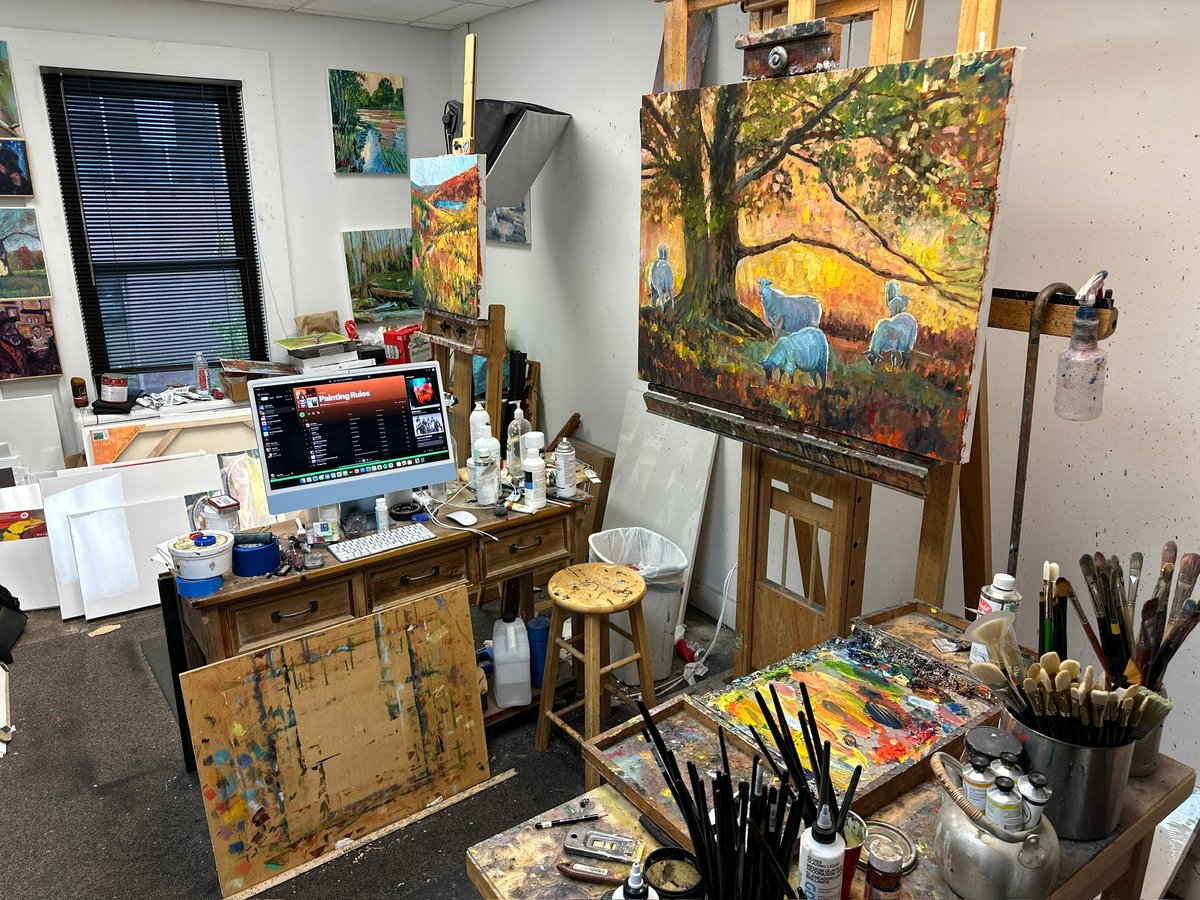
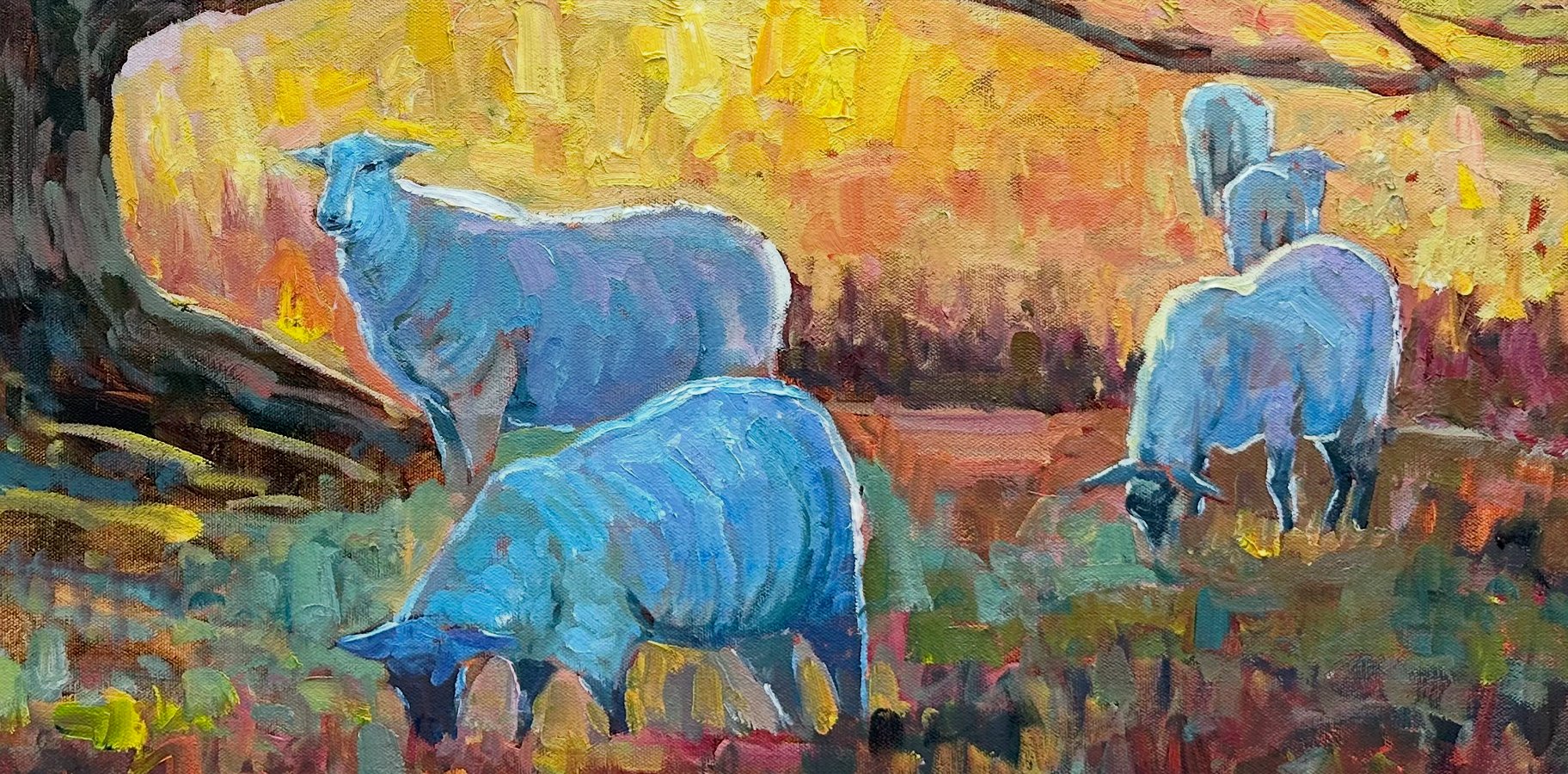
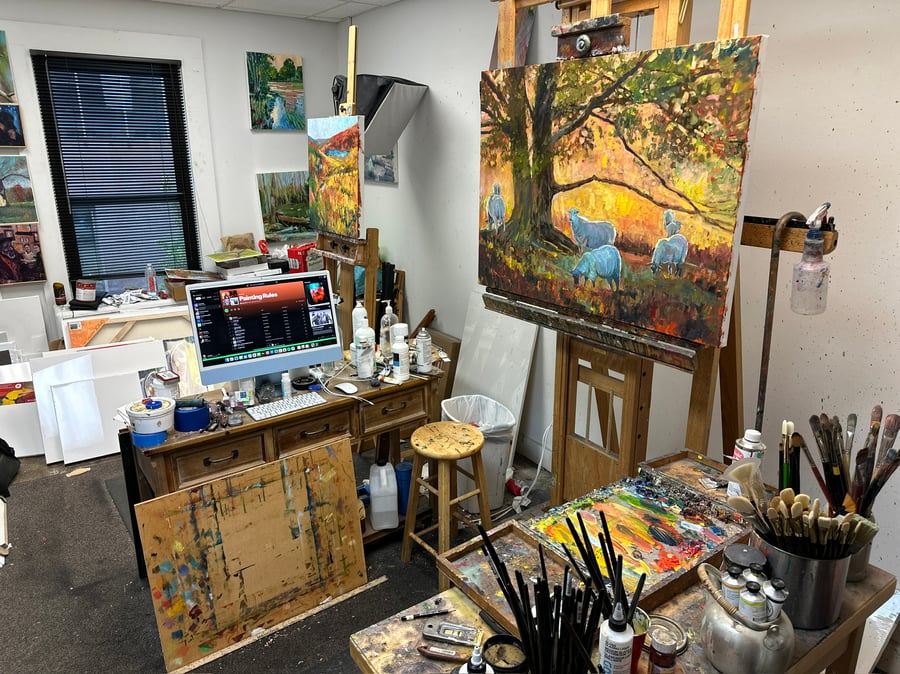
This is a photo from my studio — three sheep gathered under an old tree, late-afternoon light coming through the leaves and turning everything gold and copper. It's an older piece, but the studio still looks more or less like this on any given day: easel up, palette out, paintings stacked against the walls. If you follow me here or on Instagram, this is the version of me you know.
There's another version, and I haven't talked about it much.
Since the beginning of the year, alongside the painting, I've been building software. Specifically, I've been building software for art galleries. The project is called Primatura, and this post is the first time I'm really writing about it in public.
The reason it exists is straightforward. I'm a partner at Art Group Gallery here in Little Rock. AGG isn't a co-op in the traditional sense — there's no single owner consigning everyone else's work, and we don't pool inventory. Instead, each partner has their own allotted wall space and is responsible for the art that hangs there. We share the gallery, share the desk, share the running of the place — but the work, and the relationship to the work, stays with the partner.
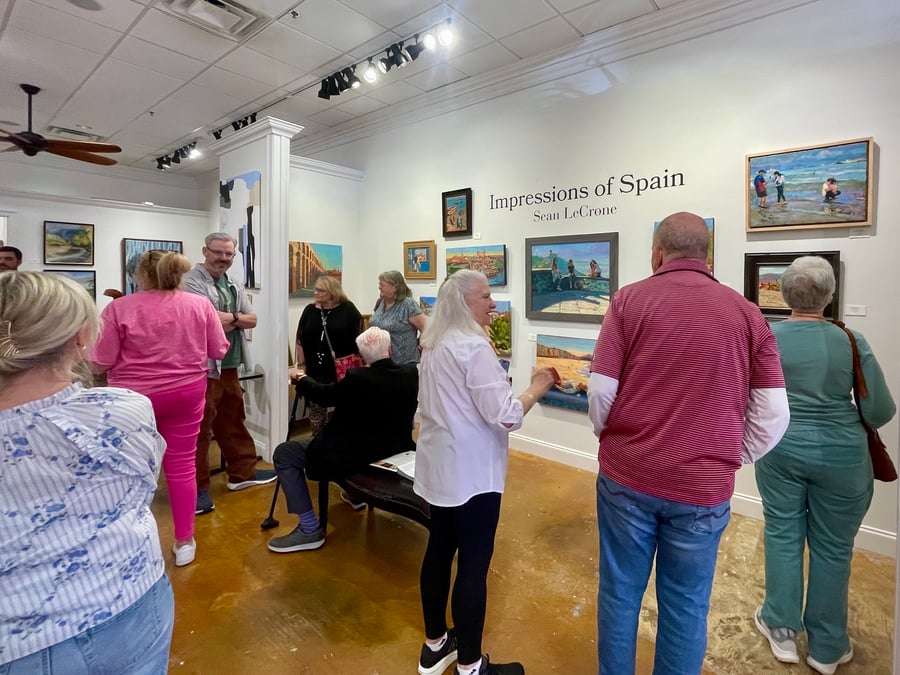
It's a good model. It's also a model that almost no gallery software is built for. Most tools assume one of two structures: either there's a central owner with a roster of consigned artists, or it's a traditional co-op with shared everything. A gallery like ours — partners operating semi-independently inside a shared space, taking turns at the desk, each managing their own inventory but transacting through a common storefront — falls between the cracks. So a sale on a Saturday becomes a small puzzle. Whose piece sold. Who needs to be notified. Whose inventory updates. Who gets paid, and how. The existing tools don't think this way, and most of the day-to-day at AGG involves working around that fact.
I have a slightly unusual background for a painter. Long before I was making my living at an easel, I was writing software — Node, TypeScript, embedded Linux, web platforms, the works. So at some point, sitting the desk on one of those Saturdays and patching together yet another workaround, I had the thought that a lot of builders eventually have: I could just make this.
So I did.
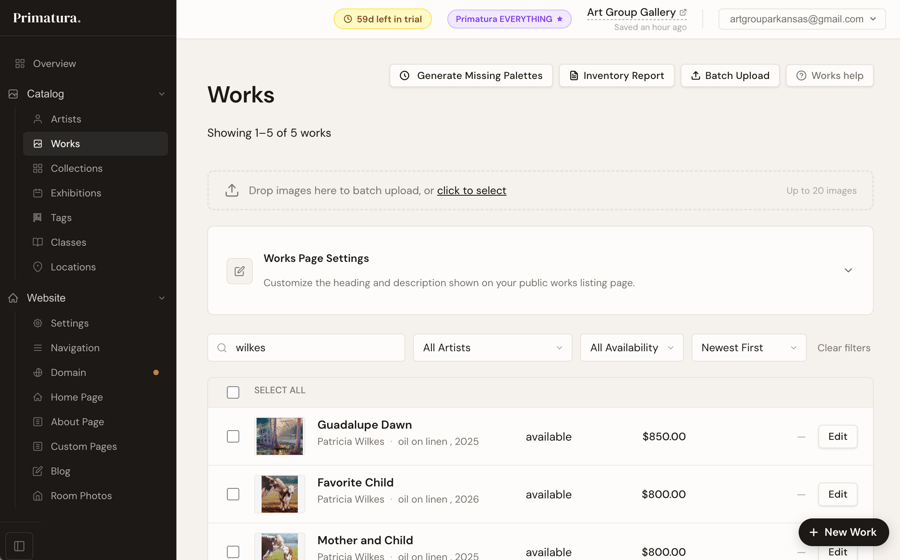
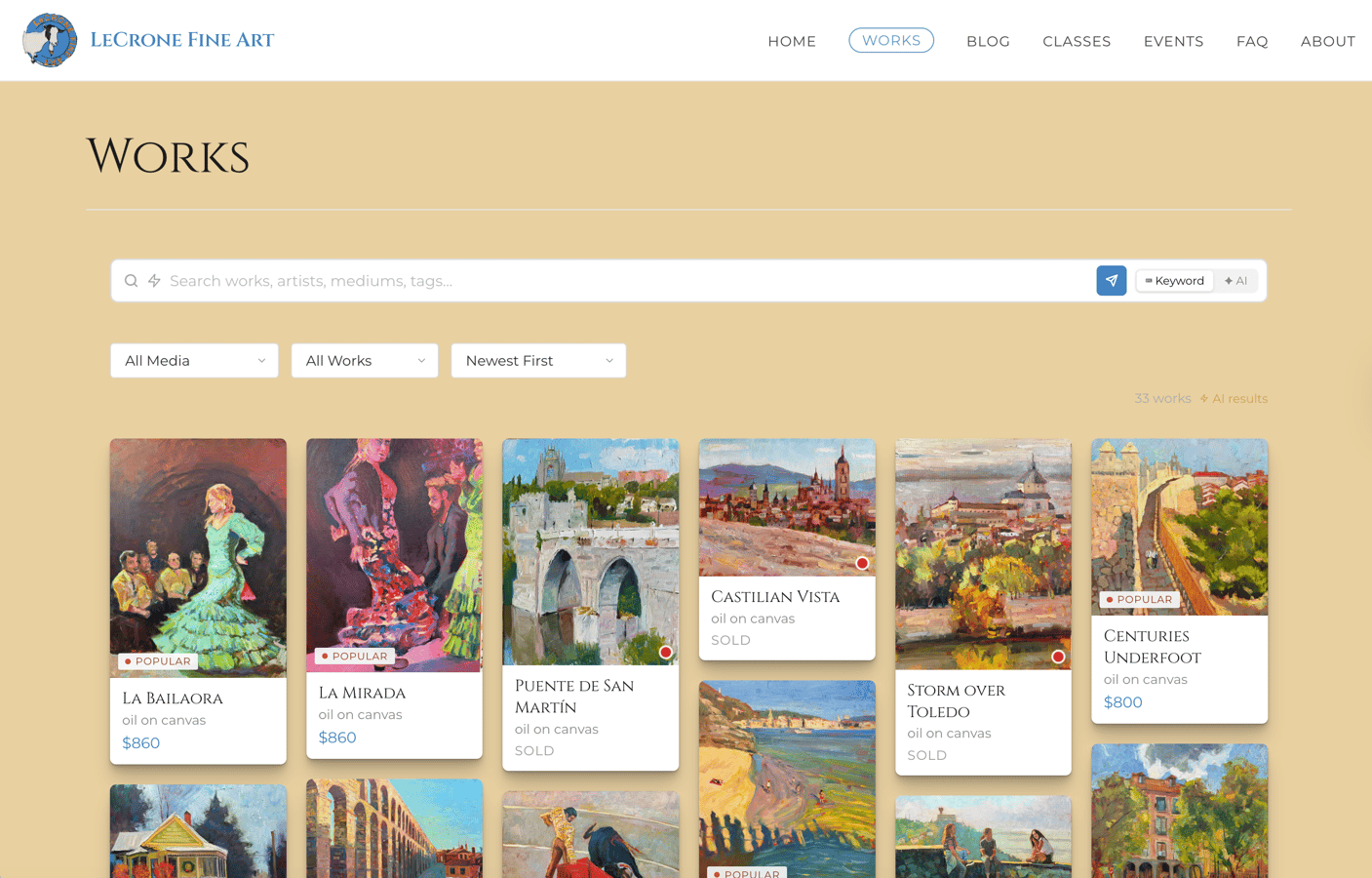
Primatura is what I built. It handles inventory, sales, artist relationships, public-facing gallery websites, artist pages, sales reporting, and the dozen smaller things that fill up a gallery's day. It's flexible enough to handle a traditional gallery, a co-op, or a setup like AGG's where partners run as semi-independent operators under one roof. It runs Art Group Gallery now. The site you're reading this on — my own artist site — is built on it too.
What I think makes Primatura different is the same thing that almost stopped me from building it: I'm too close to the problem. Most software gets built by people one or two steps removed from the work it's meant to support. They interview users, take notes, build features. I am the user. Every workflow in Primatura exists because I needed it on a specific day, for a specific piece, for a specific customer, and the existing tools failed me. That's a slow way to build a product, but it's a good way.
I'm now opening Primatura up to other galleries. If you run one, work at one, or know someone who does, I'd love for you to look at it. There's a 60-day free trial — no credit card, no commitment, just enough time to actually move your inventory in and see if it fits how you work. You can find it at primatura.com, and you can reach me directly through the site if you have questions or want a walkthrough.